 Published: Mar 2026
  Source: Guo Jing (SGRC-WA Relations Office)
The Sino-Ghana Research Center for West Africa (SGRC-WA), located within the School of Foreign Studies and Trade (SFST), successfully held an academic seminar on 16 March 2026, convening over 20 researchers and scholars to deliberate on advancements in Mandarin Chinese education in Ghana.
The seminar was moderated by Dr. Lemuel Gbologah, Director of SGRC-WA. The keynote presentation was delivered by Research Fellow Dr. Gabriel Asante, who shared findings from an ongoing study on the integration of Mandarin Chinese into Ghana’s senior high school curriculum.
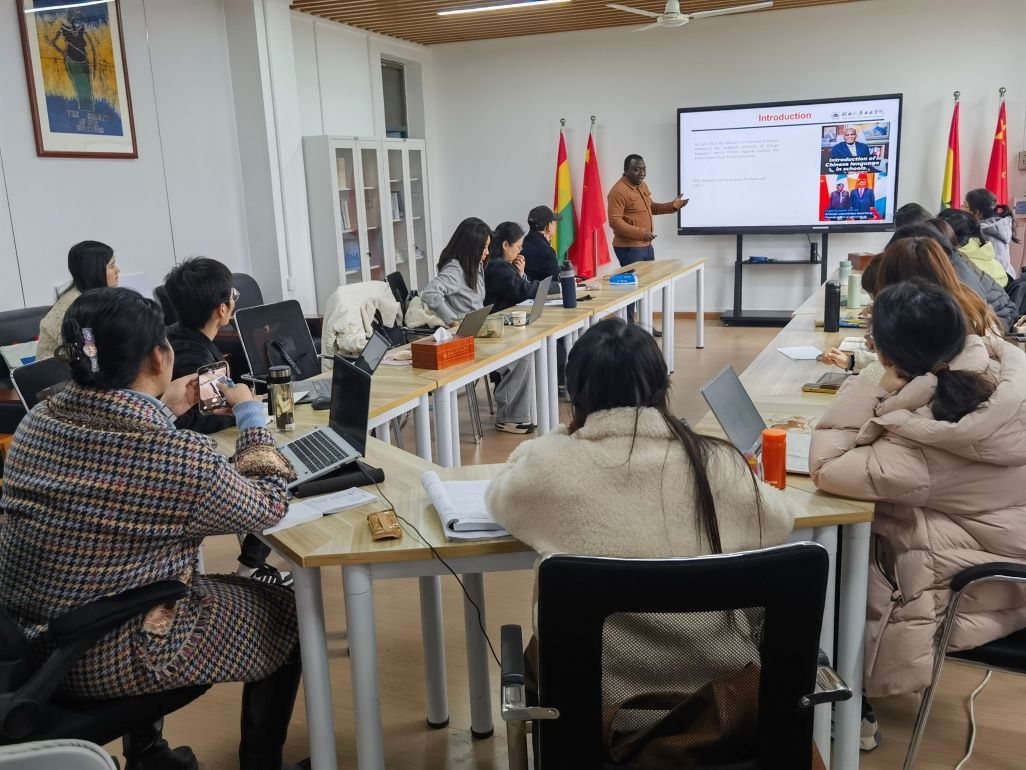
The presentation came at a significant moment in Ghana’s educational development, as policymakers continue to explore strategies to expand Chinese-language instruction within the country’s school system. The study offered a forward-looking analysis of the opportunities, challenges, and broader implications associated with this policy direction.
The research examined stakeholder perspectives on the relevance of introducing Mandarin at the senior high school level, the potential educational and bilateral benefits for Ghana and China, and the operational, pedagogical, and sociocultural issues that may arise during implementation. Participants noted that the study demonstrated strong academic value and provided practical insights for educators and policymakers involved in language planning and reform.
Following the presentation, the seminar moved into an engaging discussion session. Participants raised thoughtful questions on several aspects of the study, including the design of the interview protocols, the selection criteria for respondents, sample size considerations, and the broader cultural implications of foreign language education. The discussion added depth to the seminar and highlighted the importance of critically examining language policy within cross-cultural educational contexts.
In response to the questions, Dr. Asante provided clear and reflective explanations, fostering a constructive atmosphere of scholarly exchange. The interactive session further enriched participants’ understanding of the research topic and its wider significance for China–Africa educational cooperation.
The seminar reflected SGRC-WA’s continued commitment to advancing knowledge, supporting academic dialogue, and promoting meaningful research on key issues shaping China–Africa educational relations.


